


15 Social Impacts of Environmental Education
15 Social Impacts of Environmental Education
When we think of environmental education, most of us imagine teaching children about recycling, planting saplings in the schoolyard, or organizing nature trips. However, recent research shows that a well-designed environmental education program creates a ripple effect that extends beyond classroom walls and can transform entire communities. So how does this happen? How does a child’s environmental awareness turn into a behavioral change that spreads from their family to society as a whole? Let’s explore together the visible and invisible impacts that environmental education creates within the social fabric, examined in depth through 15 key points.
Let us begin with this question: Does environmental education only transform the individual, or does it reshape the relationship that society as a whole establishes with the environment? Scientific research increasingly provides a strong answer: Environmental education is a tool for transformation at the societal level.
1. From Individual Awareness to Collective Consciousness
The first and most fundamental social impact of environmental education is its ability to transform individual awareness into shared social consciousness. Individuals who receive environmental education at school tend to be more sensitive in considering environmental impacts in their purchasing decisions during adulthood. This is particularly significant since consumer behavior is one of the most visible indicators of social norms. A recent study confirms this: a comprehensive study conducted by Nastos and colleagues (2025) with 2,687 young adults in Greece revealed that individuals who received environmental education at school were more likely to adopt environmentally friendly consumption habits.
At this point, a key question arises: When does individual awareness become a social norm? When the number of individuals sharing the same educational experience reaches a certain threshold, environmentally friendly behaviors cease to be the “preference of sensitive individuals” and become the “expectation of society.” This transformation manifests itself in many areas, from recycling habits to energy conservation, from public transportation use to reducing plastic consumption.
2. Horizontal Learning Within the Family: Knowledge Flow from Child to Parent
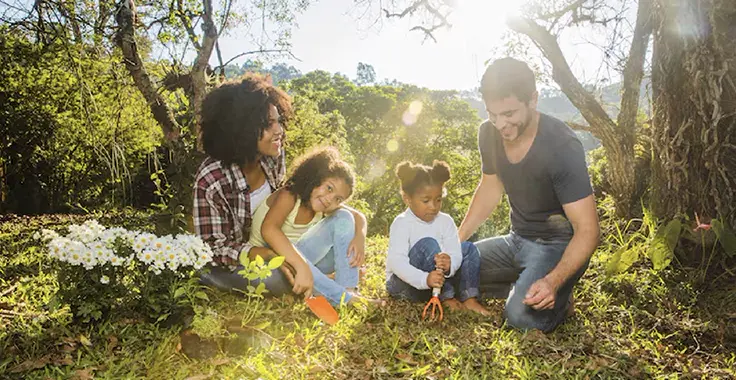
One of the most fascinating social impacts of environmental education is that it reverses the traditional flow of learning. Normally, knowledge flows from parent to child; however, in environmental education, the opposite can occur. Children bring what they learn at school into the home, share it with family members, and over time, a transformation begins in parents’ perspectives on the environment. A child asking, “Dad, why are we using plastic bags?” or “Mom, can we recycle this waste?” can lead adults to question their habits. The NBER study by Alix-García and Knittel (2025), evaluating an environmental education program aimed at protecting mangrove forests in the Dominican Republic, clearly documented this effect: not only the children who were the target group of the program, but also their parents demonstrated positive changes in attitudes.
3. Behavioral Change at the Village and Neighborhood Level
The effects of environmental education are not limited to families; they can spread throughout entire communities. The School Agenda 21 program, implemented for three years in a rural primary school in Spain, provides striking findings in this regard. In the study conducted by Pérez and colleagues (2025), evaluations involving 64 students, 48 parents, 11 teachers, and 22 village residents revealed notable results: reductions in school-generated waste, increased recycling rates, expansion of recycling areas throughout the village, and reduced vehicle use. In other words, a school program can transform the behaviors of an entire village.
4. Developing Intergenerational Justice Awareness
Perhaps one of the most abstract yet profound social impacts of environmental education is the cultivation of intergenerational justice awareness. Considering how decisions we make today will affect the quality of life of people living 50 years from now requires complex cognitive skills. Research by Bhushal and colleagues (2025) shows that individuals who receive high-quality environmental education develop a sense of responsibility toward future generations and reshape their current consumption habits within this framework of responsibility. This represents an expansion of the social contract across time.
5. Gender Equality and Environmental Education
When examining the social impacts of environmental education, it is important not to overlook the gender dimension. A significant finding in the NBER study by Alix-García and Knittel (2025) reveals that environmental education programs are particularly effective in creating attitude change among girls. This indicates that when approached from a gender equality perspective, environmental education not only contributes to the empowerment of girls but also enables them to take transformative roles in environmental protection within society.
6. Developing a Justice- and Rights-Based Environmental Perspective
A study conducted with 123 middle school students in Peru and Uganda sheds light on the justice dimension of environmental education. In this research by Wilder and colleagues (2024), students began to view environmental issues not merely as technical matters but also as issues of justice and fairness. In other words, high-quality environmental education enables individuals to shift from asking “What does the environment do for me?” to asking “Does everyone have an equal right to the environment?”
7. Public Commitment and a Culture of Social Accountability
A study conducted in two rural schools in South Africa highlights the power of making public commitments in environmental education. In the study carried out by Goldschagg and colleagues (2025), students received training aimed at reducing plastic waste and were then divided into two groups: one group made commitments publicly in front of their peers (public commitment), while the other made private commitments. The results were striking: students who made public commitments demonstrated significantly higher rates of sustaining environmentally friendly behaviors compared to those who made private commitments. Promises made in the presence of others are more effective in changing behavior.
8. The Development of Critical Consciousness and Civic Culture
One of the long-term social impacts of environmental education is the development of critical consciousness. The School Agenda 21 study conducted by Pérez and colleagues (2025) in Spain observed that the program not only created behavioral change but also enhanced participants’ critical environmental literacy and civic engagement. Students begin to ask not only “What should I do?” but also “Why are we doing this?” and “Who decides this?” This lays the foundation for a more participatory, questioning, and accountable civic culture.
9. Lifelong Learning and Continuous Development
Another interesting finding from Nastos and colleagues’ (2025) study in Greece is that participants aged 26–29 demonstrated higher environmental awareness than those aged 18–21. In other words, the effects of environmental education do not diminish over time; on the contrary, they increase. This suggests that environmental education does not function like a “vaccine” administered during school years, but rather like a seed that grows and deepens throughout life. As individuals age, experiences and new knowledge build upon this foundation.
10. Peer Influence and Social Ripple Effect
One of the most striking findings from Alix-García and Knittel’s (2025) study in the Dominican Republic is that positive effects were observed even among peers who did not directly participate in the education program. Friends of the children in clubs, who interacted with them regularly, indirectly developed more positive attitudes toward mangrove conservation. This shows that the social impacts of environmental education can extend far beyond directly targeted groups, as knowledge and attitudes spread through social networks in waves.
11. Guiding Career Choices in STEM Fields
Research published by Bhushal and colleagues (2025) indicates that environmental education also influences young people’s career preferences. Following a field trip focused on wastewater management and renewable energy technologies, students showed increased interest in pursuing careers in these areas. This is highly significant: environmental education contributes not only to transforming consumption habits but also to encouraging the selection of professions that will transform production systems.
12. Social Resilience and Preparedness for Crises
Among the less frequently discussed social impacts of environmental education is its role in strengthening social resilience. In the face of climate change, natural disasters, and environmental crises, informed and aware societies are better equipped to cope with such challenges. The study by Nastos and colleagues (2025) shows that individuals who receive environmental education assess environmental risks more accurately and are able to develop more effective collective actions in times of crisis. This enhances societies’ capacity to adapt to changing environmental conditions.
13. Developing Local Solutions to Concrete Environmental Problems
The study conducted by Goldschagg and colleagues (2025) in South Africa demonstrates that one of the strongest aspects of environmental education is its ability to transform abstract global problems into concrete local actions. Students experienced plastic pollution—a global issue—as a local challenge they could address within their own schoolyards. Environmental education cultivates individuals who internalize the principle “think globally, act locally.”
14. Political Participation and Advocacy Skills
One of the long-term social impacts of environmental education is its ability to increase political participation. Research by Pérez and colleagues (2025) shows that individuals who receive environmental education are more likely to participate in decision-making processes related to environmental policies, volunteer in relevant civil society organizations, and engage in environmental advocacy. In other words, environmental education builds not merely a passive “love of nature,” but an active “environmental citizenship.” Individuals take action not only to change their own behaviors but also to influence societal rules.
15. Cultural Change and New Social Norms
With the combination of all these effects, environmental education gradually leads to lasting changes in the cultural fabric of society. Being “environmentally conscious” becomes not just a personal choice but a social expectation. Behaviors such as avoiding plastic bags, recycling, and conserving energy become part of the definition of being a “good citizen.” At this point, environmental education achieves its ultimate goal: sustainable lifestyles become widely accepted social norms.
Key Points
In light of all this research, we can say that we need to redefine our expectations from environmental education:
Environmental education is not a "school activity," but a "tool for societal transformation." Its effects go beyond classroom walls and spread to families, neighborhoods, and the entire community (Pérez et al., 2025; Alix-García & Knittel, 2025).
Its effects may not be immediately visible, but they are lasting. As shown by Nastos and colleagues (2025), the impacts of environmental education deepen with age.
The strongest impact comes from experiential and sustainable programs. Instead of one-time activities, year-long programs that involve the community create lasting behavioral change (Goldschagg et al., 2025; Bhushal et al., 2025).
Environmental education should be approached from a justice- and rights-based perspective. It should foster not only a love of nature but also a sense of social justice (Wilder et al., 2024).
Frequently Asked Questions
Question: How long does it take to observe the social impacts of environmental education?
Some behavioral changes can be observed immediately during the program, but lasting social norm transformations may take years. The research by Nastos and colleagues (2025) shows that the effects of environmental education increase with age. The key factor is that the education remains sustainable and continuous.
Question: What types of environmental education programs are more effective in societal transformation?
Experiential, participatory, and community-based programs are found to be the most effective. Bhushal et al. (2025) emphasize the impact of field trips, while Goldschagg et al. (2025) highlight the effect of making public commitments. Additionally, as shown by Pérez and colleagues (2025), the long-term nature of the program is also critically important.
Question: Does environmental education have the same impact in every society?
Cultural, economic, and geographical factors shape the impacts of environmental education. Research conducted by Wilder et al. (2024) in Peru and Uganda, Goldschagg et al. (2025) in South Africa, Pérez et al. (2025) in Spain, and Nastos et al. (2025) in Greece shows that programs need to be adapted to the local context. However, the core mechanisms (family diffusion, peer influence, community transformation) appear to be universal.
References
Alix-García, J., & Knittel, C. R. (2025). Growing awareness: Evaluating the impact of environmental education on attitudes, knowledge, and behavior (NBER Working Paper No. 33675). National Bureau of Economic Research.
Bhushal, G., Smith, M., Lal, P., & Vedwan, N. (2025). Influence of field trips on adolescent environmental stewardship: Examining the role of the dominant social paradigm. World, 6(3), 88.
Goldschagg, P. L., Maunatla, M. P., Mahlangu, T. P., & Van Rensburg, R. (2025). Fostering responsibility and commitment as tools in geographical environmental education to reduce plastic pollution in rural schools in a South African context. South African Geographical Journal.
Nastos, G., Mitoula, R., Theodoropoulou, E., & Astara, O. E. (2025). The impact of environmental education on sustainable development, environmental consciousness and pro-environmental behaviour. Sustainable Production, Environment, and Energy, 44(4).
Pérez, M., García, L., & Rodríguez, C. (2025). Empowering communities: The transformative influence of School Agenda 21. Journal of Environmental Education, 56(1), 1-20.
Wilder, R., Nuwategeka, E., Monge, C., & Bazan Talavera, A. (2024). Environmental justice in education for climate action: Case studies from Perú and Uganda. Children & Society.
 Previous