


Core Principles of Environmental Education
Core Principles of Environmental Education
Today, environmental issues are no longer limited to the agendas of scientists or policymakers. Climate change, the depletion of natural resources, and ecosystem losses directly affect our daily lives. At this point, environmental education stands out as a fundamental learning process that transforms individuals’ relationship with nature. In this article, we will examine what environmental education means, the principles on which it is built, and especially its lasting effects on children in the light of academic findings.
How Is Environmental Education Defined?
Viewing environmental education merely as teaching love for nature would be incomplete. Let us examine it within a more scientific framework.
Environmental education is a systematic learning process that includes key topics such as the conservation of natural resources, sustainable use, renewable energy, waste management, and ecosystem balance. The goal is not only to transfer knowledge but to permanently transform individuals’ environmental attitudes, values, and behaviors (Palmer, 1998).
Research shows that starting environmental education at an early age strengthens a sense of environmental responsibility. Chawla and Cushing (2007) demonstrated that meaningful connections with nature during childhood strongly predict environmental protection behaviors in adulthood.
Therefore, environmental education should be considered a holistic field of development that builds a bridge between knowledge and behavior.
The Path from Knowledge to Behavior
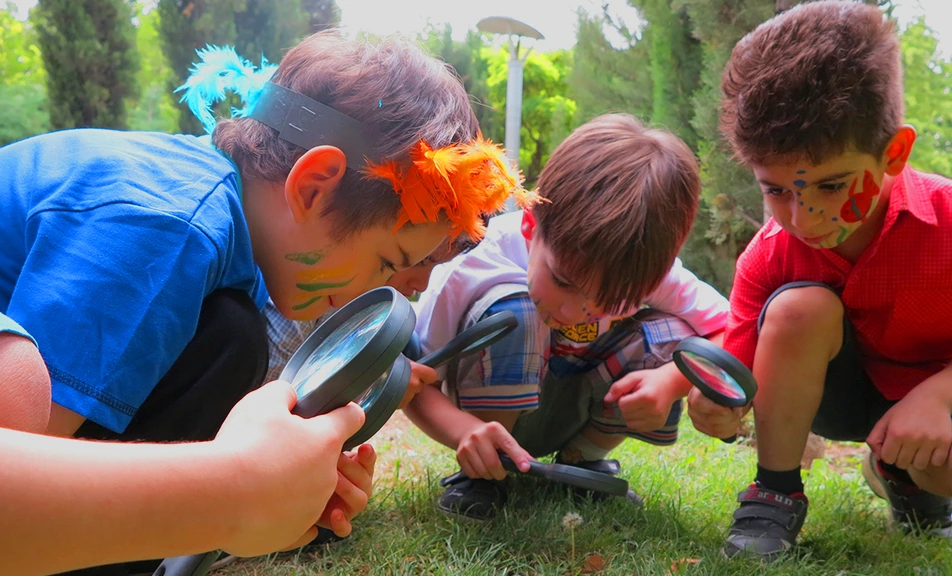
Purely theoretical knowledge is insufficient to create environmental awareness. Learning supported by sensory experiences, practice, and direct interaction accelerates behavioral change.
What Are the Core Principles of Environmental Education?
At this point, to understand why environmental education produces more effective results in some programs, it is necessary to closely examine its core principles.
The first principle is the holistic approach. Environmental issues should be addressed not only biologically but also through social, economic, and cultural dimensions. Tilbury (1995) emphasized that the interdisciplinary nature of environmental education strengthens lasting learning.
The second principle is active participation. Instead of classroom environments where children are passive listeners, the aim is for them to become individuals who observe, question, and gain experience in nature. Kolb’s experiential learning theory shows that learning by doing significantly enhances cognitive retention (Kolb, 1984).
The third principle is practical application. Recycling projects, nature walks, gardening activities, and ecological games connect learned knowledge with real life.
The Power of Activity-Based Learning
This approach is supported not only theoretically but also by field data. According to the 2021 Education Statistics Report published by the Ministry of National Education, in programs where environmental topics are supported through activities, children’s comprehension levels increase by approximately 47%.
What Values Does Environmental Education Develop in Children?
While knowledge acquisition is important, the true strength of environmental education emerges in the area of values.
Research shows that children who receive environment-based education develop stronger empathy and an early sense of responsibility (Wells & Lekies, 2006).
Additionally, environmental habits gained at a young age tend to turn into long-lasting behaviors in adulthood. Practices such as recycling, saving water, and energy awareness are internalized through early experiences.
Small Steps, Big Impact
Children are not burdened with “saving the world”; instead, they are taught that small contributions create big change. Protecting a tree, separating waste, or avoiding harm to living beings forms the foundation of environmental ethics.
Why Should Environmental Education Not Be Limited to the Classroom?
This leads us to a critical point: environmental education is not merely a curriculum subject.
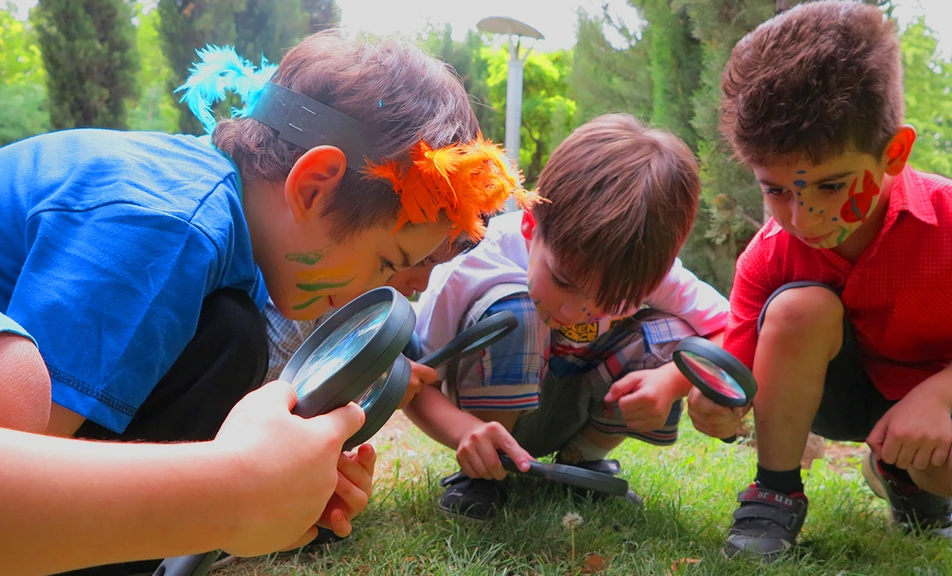
When classroom knowledge is not supported by real-life experiences, the rate of behavioral change decreases. Louv (2008) showed that children who have direct contact with nature demonstrate both higher academic achievement and greater environmental awareness.
Key Points
• Environmental education aims to develop behavior as well as knowledge
• Early-start environmental education builds lasting environmental responsibility
• Active participation and practice strengthen learning
• Activity-based programs significantly improve comprehension
• Environmental education is a strong component of values education
Frequently Asked Questions (FAQ)
At what age should environmental education begin?
Research indicates that the preschool period is the most effective stage for developing environmental awareness.
Is classroom instruction alone sufficient?
No. Without experience, activities, and contact with nature, behavioral change remains limited.
Does environmental education affect academic achievement?
Yes. Nature-based learning increases attention, problem-solving skills, and motivation.
How can families contribute to the process?
They can support it through recycling practices at home, nature outings, and model behaviors.
References
Chawla, L., & Cushing, D. F. (2007). Education for strategic environmental behavior. Environmental Education Research, 13(4), 437–452.
Kolb, D. A. (1984). Experiential learning: Experience as the source of learning and development. Prentice Hall.
Louv, R. (2008). Last child in the woods: Saving our children from nature-deficit disorder. Algonquin Books.
Palmer, J. A. (1998). Environmental education in the 21st century: Theory, practice, progress and promise. Routledge.
Tilbury, D. (1995). Environmental education for sustainability. Environmental Education Research, 1(2), 195–212.
Wells, N. M., & Lekies, K. S. (2006). Nature and the life course. Children, Youth and Environments, 16(1), 1–24.
 Previous