


The Difference Between Science Education and Engineering
New Approaches: The Difference Between Science Education and Engineering
Dear educators, visionary leaders, and curious minds...
Is it possible to learn a sport simply by reading the rulebook? Just as memorizing theoretical information without ever stepping onto the field or touching the ball cannot make an athlete successful, merely memorizing facts from books is equally insufficient for building a true scientific mindset in the sciences.
But what if we redesigned education to transform the student from a passive recipient into an active producer of knowledge? This is exactly what the Next Generation Science Standards (NGSS) do: they transform science from a static pile of information into a living process.
Let’s examine the cornerstones of this revolutionary transformation in science education together...
1. Three-Dimensional Learning: A Journey into the Depths of Knowledge
The philosophy of Next Generation Science Education Standards views learning not just as the transfer of information, but as a "process of making sense." In this process, disciplinary core ideas, crosscutting concepts, and scientific practices combine to form an unshakable foundation.
How is it applied? In education, it is not just "what" is learned that gains importance, but "how" it is learned. While a student learns the structure of a cell (knowledge), they notice the flow of energy (crosscutting concept) and prove this knowledge by creating a model (practice). Thus, learning becomes permanent and functional.
2. Practice, Not Just Skill: Transforming Theory into Action
While the concept of "skill" often refers to routine procedures, "practice" involves using that mechanical skill to serve a specific purpose. Science classrooms now aim not just to teach how to use a microscope, but how to solve a problem using that microscope.
How is it applied? Knowing how to use a chef's knife is a skill; however, knowing which vegetable to chop in a certain way and why is a practice. In a science class, simply recording data is a skill, but generating an argument from 그 data is a true scientific practice.
For detailed examples of skill applications, you can click here.
3. Science and Engineering: From Explanations to Solutions
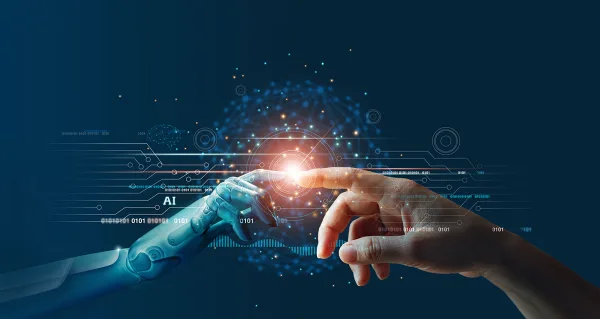
While science tries to understand the world (Explanations), engineering focuses on solving problems within this world (Solutions). NGSS places engineering at the heart of the curriculum, giving students the power to change the world.
How is it applied? A student doesn't just learn why it rains; they design a drainage system to protect the soil during heavy rainfall. In this way, theoretical knowledge transforms into a social benefit.
For examples of engineering integration, you can access them here.
4. K-12 Developmental Process: Step-by-Step Deepening Data
Scientific practices follow a vertical progression from kindergarten to the end of high school. While the names of the practices remain the same, the depth of application grows alongside the student's cognitive capacity.
How is it applied? The process of data analysis, which begins with counting insects in the garden in kindergarten, evolves into experiments where variables are controlled in middle school, and complex mathematical simulations in high school.
5. Construction of Language: Communication in the Science Classroom
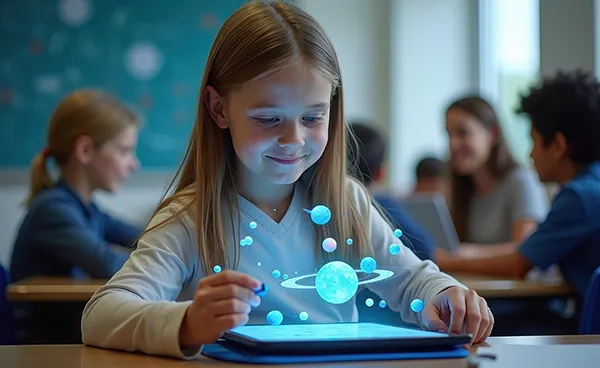
Science does not consist solely of formulas; scientists constantly read, write, and debate. Therefore, the science classroom is also a natural area for language development.
How is it applied? Students learn to defend their claims with evidence while sharing experiment results. Saying "the plant withered because we didn't give it water" is the transformation of a simple observation into a scientific argument.
6. Next Generation Assessment: Putting Knowledge to Work
Rote-memorization questions like "What is the powerhouse of the cell?" are now a thing of the past. Next-generation exams position the student like a detective, presenting real-life scenarios.
How is it applied? A student is presented with graphs regarding fish deaths in a lake. The student is then asked to interpret this data and develop a model that explains the possible cause with evidence.
Final Word: Building a Questioning Future
The primary goal of this transformation is not just to raise academic scientists. The real aim is to raise inquisitive individuals who, when faced with information pollution in daily life, can ask, "Where is the data?" and "What is the evidence it's based on?"
NGSS and engineering practices teach students not only to understand the world but also to improve it. With detailed implementation guides and educator content, Envikid.com is with you on this journey of transformation.
Come, let's turn science classrooms into laboratories of discovery. Because the world of tomorrow will be built by the children who ask "why?" today.
Remember: Science is not a destination, but an endless journey. And true learning is hidden within the journey itself.
 Previous