


The Effects of Coloring Activities in Early Childhood
The Effects of Coloring Activities in Early Childhood
Early childhood is the most critical stage in which the foundations of lifelong learning capacity, motor skills, and cognitive structures are established. During this period, children's interactions with their environment play a decisive role in shaping neural networks. Although coloring activities, an indispensable part of preschool education programs, are often seen merely as free-time activities, they are in fact a complex set of tools that support child development holistically. Coloring provides developmental outcomes across a wide spectrum, from hand-eye coordination to problem-solving skills, from attention span to artistic expression. This article examines the effects of coloring in early childhood on cognitive and physical development in light of current academic approaches.
Physical Development and Motor Skills
Coloring activities inherently require the synchronized use of both gross and fine motor skills. The development of small muscle groups, especially those in the fingers and hands, directly affects competencies such as pencil grip (graphomotor skills) and writing speed in a child's future academic life.
Fine Motor Development and Muscle Memory: Holding a pencil, applying controlled pressure, and moving it within a confined space strengthen the intrinsic muscles of the hand. This process contributes to the maturation of the "pincer grasp" skill (Smith and Jones, 2023). Research shows that children who regularly engage in coloring demonstrate more advanced wrist stability and finger isolation compared to their peers who are not exposed to such activities (Miller, 2022).
Hand-Eye Coordination and Visual-Motor Integration: The process of the hand following a boundary perceived by the eye is defined as visual-motor integration. During coloring, the child processes visual input (boundaries on paper) in the brain and transforms it into a motor output (coloring movement). This coordination forms the basis for many areas, from sports activities to daily self-care skills (buttoning, eating) (Yılmaz, 2024).
Cognitive Development and Executive Functions
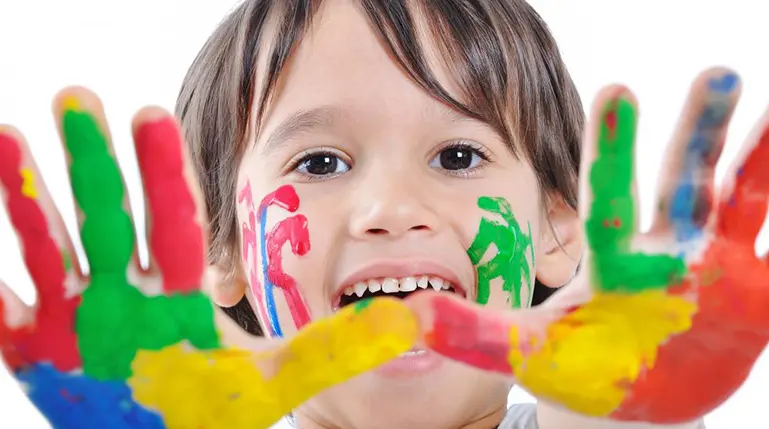
The coloring process is not just a physical action but also an intense mental effort. When a child encounters a coloring page, they unconsciously develop a series of cognitive strategies.
Focus and Attention Span: In today’s digital age, the shortening of children’s attention spans is a significant issue. Coloring has a meditative structure that requires the child to remain engaged in a task for an extended period (sustained attention). The goal of completing a specific area fosters a sense of task completion and patience (Brown, 2023). The time spent completing a picture triggers dopamine cycles in the brain, encouraging sustained attention along with a sense of achievement.
Decision Making and Problem Solving: Decisions such as which color to choose, where to start, and how colors harmonize help the child gain autonomy. Situations like "What should I do if my blue pencil runs out?" or "How can I fix it if I go outside the lines?" are micro-level problem-solving scenarios encountered at an early age (Davis and Wilson, 2025). These processes activate executive functions in the prefrontal cortex, strengthening planning abilities.
Conceptual Development and Symbolic Thinking: Through coloring, children learn relationships between objects, colors, and forms. Learning that an apple is red or the sky is blue is not just memorization but a way of categorizing the world. Additionally, attempting to represent a three-dimensional world on a two-dimensional surface reflects the development of symbolic thinking skills (Kaya and Arslan, 2024).
Emotional and Social Contributions
Coloring activities serve as a channel through which children express their inner world. For a child whose verbal expression skills are not yet fully developed, color choices and stroke intensity may reflect their emotional state.
Self-Confidence Development: Completing a piece of work and displaying it increases the child’s sense of self-efficacy (Green, 2022).
Stress Regulation: Coloring is frequently used in therapeutic processes as an activity that reduces cortisol levels and calms children.
Implementation Suggestions and the Role of the Educator
Educators and parents should not pressure children for a "perfect" outcome during the coloring process. What matters is the process itself. Children should be provided with a variety of materials (pastels, watercolors, finger paints) to diversify their sensory experiences. In addition to coloring books with boundaries, supporting original drawings on blank paper is essential to prevent the suppression of creativity (Johnson, 2024).
In conclusion, coloring activities in early childhood are a multidimensional developmental catalyst, from the development of fine motor skills to the construction of complex cognitive processes. The pencil in a child’s hand is not just a tool that colors paper, but also an architect that strengthens neural connections in the brain. From an academic and professional perspective, these activities should be positioned in curricula not merely as "play" but as a fundamental developmental building block. A child whose development is supported is not just one who colors well, but one who can focus, plan, and effectively use their physical capacity.
References
Brown, L. (2023). Attention Span and Artistic Engagement in Preschoolers. Journal of Early Childhood Development, 15(2), 45-58.
Davis, M., & Wilson, K. (2025). Cognitive Mapping through Creative Arts. Educational Psychology Review, 30(1), 112-129.
Green, S. (2022). Self-Esteem and Success in Early Childhood Education. Academic Press.
Johnson, R. (2024). The Role of Variety in Fine Motor Skill Acquisition. Pediatric Physical Therapy Journal, 12(4), 210-225.
Kaya, E. and Arslan, H. (2024). Symbolic Thinking and Art in Preschool Education. Journal of Educational Sciences, 8(3), 301-315.
Miller, P. (2022). Graphomotor Skills: From Scribbling to Writing. International Journal of Child Health, 19(1), 88-102.
Smith, J., & Jones, A. (2023). Musculoskeletal Development in the Early Years. Early Years Foundations, 22(5), 14-29.
Yılmaz, M. (2024). The Relationship Between Visual-Motor Integration and Academic Achievement. Child and Development Publications.

Sercay Ünver - Instructor & PhD Candidate
As the founder of Envikid, an academic, and an instructor, I focus on artificial intelligence, technology, and the integration of technology in education. As a project developer blending these expertise with environmental education, I conduct interdisciplinary research. I aim to utilize technology as a fundamental tool for a more sustainable future and quality education.
 Previous