


The Future Impacts of the Love of Environment Shaped in Early Childhood
The Future Impacts of the Love of Environment Shaped in Early Childhood
A Longitudinal Analysis of Developmental, Cognitive, and Ecological-Behavioral Processes
Early childhood is the most sensitive stage of life, where the foundations of an individual's cognitive, sensory, social, and physical development are laid, and fundamental perceptions and values toward the world are shaped (Wilson, 1996). The interactions a child establishes with their immediate surroundings and natural environments during this critical period not only support well-being during childhood years but also construct the architecture of pro-environmental behaviors (PEB) and the ethical stance they will develop toward nature in adulthood (Palmer, 1994). In the face of deepening global ecological crises, climate change, and biodiversity loss, the primary way to raise adults who possess environmental protection awareness and adopt sustainable living habits is rooted in awakening a love of nature in the child during the first years of life (Mendoza et al., 2025).
In this academic study, the long-term effects of the love of the environment shaped in early childhood on an individual's future environmental attitudes, behaviors, and mental health are analyzed in light of longitudinal, theoretical, and empirical research. The study comprehensively addresses the psychological mechanisms enabling the transfer of nature experiences to adult behaviors, cognitive and psychological protective (buffering) effects, the importance of parental and teacher roles, and the potential future risks of nature deficit disorder.
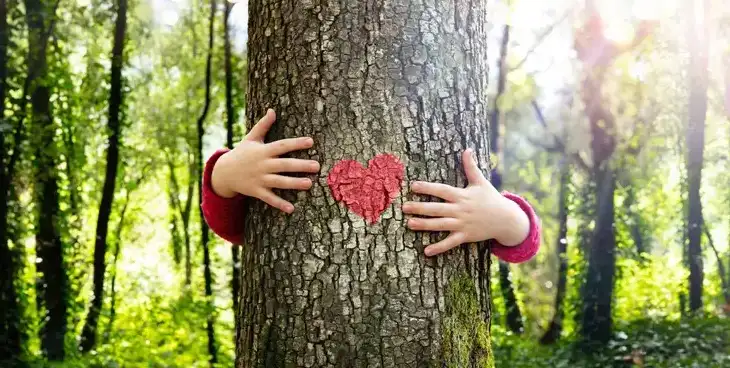
Theoretical Foundations and the Ecology of Early Childhood
Various theoretical approaches explain the initial bonds a child establishes with nature and the permanence of this connection. These theories reveal both the biological and experiential origins of the relationship between humans and the environment.
The Biophilia Hypothesis and Emotional Connectedness: Put forward by Edward O. Wilson (1984), the Biophilia Hypothesis argues that the human species possesses an innate, evolutionary affinity toward other living organisms and natural systems (Wilson, 1984). Due to their developmental characteristics, children are highly open to and curious about interacting with elements of the natural world (plants, animals, soil, water) (Kahriman Pamuk, 2021). The innate inclination of children who spend time freely in nature is nurtured, and fundamental values such as empathizing with, respecting, and protecting nature are internalized through a natural process (Kahriman Pamuk, 2021). According to the biophilia hypothesis, repeated interactions established with nature in free and unrestricted settings allow the individual to form a strong emotional bond with nature, laying the groundwork for future environmental protection motivation (Rosa & Collado, 2019).
Significant Life Experiences Approach and Critiques: Holding a significant place in environmental education literature, Significant Life Experiences (SLE) research examines the retrospective life stories of individuals who play an active role in environmental protection or choose environment-oriented career paths in adulthood (Tanner, 1980). Deepened by Louise Chawla (1998, 1999), this approach has revealed that the most powerful source in forming a lasting environmental consciousness is the quality time spent outdoors during childhood years, particularly in the company of a close adult (Chawla, 1998; Chawla, 2007).
However, SLE research is criticized in certain aspects. For instance, it is noted that these studies largely focus on privileged groups and positive nature experiences (Ceaser, 2014). Studies adopting an Environmental Justice perspective show that negative social-environmental experiences (e.g., fear, helplessness, and environmental pollution) among disadvantaged or marginalized groups can also generate strong motivation for environmental activism in adulthood (Ceaser, 2014). Similarly, research conducted with experts working on climate change and carbon reduction reveals that childhood outdoor experiences are not always the most dominant factor; elements such as the pursuit of social justice, global ethical values, and political stances can also drive individuals toward pro-environmental actions (Howell & Allen, 2019). This situation demonstrates that love for the environment and ecological consciousness can be constructed through multi-dimensional pathways.
Mechanisms of the Impact of Nature Experiences on Adult Environmental Behaviors
How Childhood Nature Exposure (CNE) shapes pro-environmental behaviors (PEB) in adulthood is explained through longitudinal and mediator variable analyses.
The Mediator Role of Environmental Feelings and Connectedness: Recent empirical studies show that time spent in nature during childhood does not always have a direct impact on pro-environmental behaviors in adulthood; instead, this effect occurs indirectly through the mediator variables of "Environmental Feelings" (EF) and "Environmental Connection" (EC) (Martin et al., 2020). Individuals who have direct contact with nature in childhood and make free explorations outdoors develop stronger emotional sensitivities toward the environment and a deeper sense of integration with nature (Collado et al., 2015). When the individual reaches adulthood, this emotional foundation transcends rational awareness of environmental problems and transforms into active environmental protection actions (such as biodiversity conservation efforts, energy conservation, sustainable consumption) (Soga et al., 2016).
The Comparative Role of Wild and Domesticated Nature Experiences: The quality of nature experiences in childhood is also decisive for their future impacts (Wells & Lekies, 2006). In a comprehensive study conducted at Cornell University, which analyzed the childhood experiences of more than 2,000 adults, nature activities that children participated in before the age of 11 were classified as "Wild Nature Experiences" and "Domesticated Nature Experiences" (Wells & Lekies, 2006).
Wild Nature Experiences: Include unstructured activities whose rules are determined by the child, such as playing freely in the woods, camping, hiking, and fishing (Wells & Lekies, 2006). These types of experiences are the strongest predictors shaping pro-environmental attitudes and behaviors in adulthood (Wells & Lekies, 2006).
Domesticated Nature Experiences: Consist of more controlled and human-shaped activities, such as gardening, growing plants, and caring for pets (Wells & Lekies, 2006). While these activities also support a love for the environment, they do not produce as lasting and powerful an effect as free play in wild nature (Wells & Lekies, 2006).
Interestingly, it has been found that mandatory school clubs or structured institutional environmental programs with rigid rules do not leave as distinct an impression on children's future pro-environmental attitudes as free play does (Wells & Lekies, 2006). Moving from this point, the child's freedom in nature and interaction free from rules is accepted as the most fundamental element in internalizing the love of the environment (Wells & Lekies, 2006).
Table 1 below summarizes the impact of childhood nature experiences on adult behavioral outcomes through mediator variables and related scientific studies.
| Type of Childhood Nature Experience | Primary Mediator Variables | Adult Environmental Outcomes | Supporting Academic Sources |
|---|---|---|---|
| Unstructured Wild Nature Play | Environmental Feelings (EF), Environmental Connection (EC), Emotional Bond. | High levels of PEB, active nature conservation, ecocentric worldview. | Wells & Lekies (2006); Collado et al. (2015). |
| Domesticated Nature Activities | Local environmental awareness, love for plants/animals. | Moderate levels of PEB, appreciation of green spaces. | Skelly & Zajicek (1998); Wells & Lekies (2006). |
| Mandatory Environmental Education Programs | Cognitive knowledge, rational environmental concern. | Short-term knowledge increase; however, behavioral transformation is limited. | Duerden & Witt (2010); Wells & Lekies (2012). |
Social and Environmental Context Factors: Parent and Mentor Influence
The quality of the interaction a child establishes with nature is directly related to the attitude and behavior patterns of the adult figures in the micro-system they grow up in (Evans et al., 2018). A 12-year longitudinal study conducted by Gary W. Evans and colleagues (2018), tracking individuals from age 6 to age 18, revealed that one of the strongest independent predictors of adult environmental behavior was "maternal environmental sensitivity" and "time spent outdoors in childhood" (Evans et al., 2018). It was determined that children whose mothers possessed pro-environmental attitudes and who spent more time outdoors during childhood acted much more responsibly toward the environment in their young adulthood (Evans et al., 2018).
As emphasized in Louise Chawla's (2007) theoretical framework, exploring nature under the guidance of a loved and trusted adult (parent, grandparent, or teacher)—rather than leaving a child alone in nature—is one of the most critical transformative factors (Chawla, 2007). The compassion an adult shows toward a living creature in nature, their admiration for a tree shedding its leaves, or their sensitivity toward environmental pollution is observed and emulated by the child, turning into a permanent environmental ethic (Chawla, 2007). This process also strengthens the bonds between the child and the parent, enhancing intra-familial harmony (Barcelona Institute for Global Health, 2019).
However, socio-economic environmental factors are also influential in this process. In an empirical study conducted by Kathryn Stevenson and colleagues (2014), it was found that middle school students' environmental knowledge and behaviors were closely related not only to time spent in nature or role models but also to the socio-economic structure of the school, teacher-student ratios, and the income level of the region (Stevenson et al., 2014). Furthermore, it was found that indirect environmental experiences (such as watching nature documentaries on television) could have a negative impact on children's environmental knowledge (Stevenson et al., 2014). This situation clearly demonstrates that virtual and passive environmental experiences cannot substitute for direct and active nature interaction.

Cognitive and Psychological Protective Effects
The love for the environment built in early childhood and the contact established with nature do not only shape future environmental protection behaviors but also serve as a "buffer" that directly improves the child's current mental health and cognitive capacity (Wells & Evans, 2003).
The Impact of Green Spaces on Cognitive Functioning and Attention Capacity
In a longitudinal study conducted by Nancy M. Wells (2000), it was found that children who moved from low-income urban areas to greener residential areas experienced significant increases in cognitive functioning and focus capabilities (Wells, 2000). Trees and green spaces located near a child's home or school reduce the mental fatigue caused by urban noise and crowding (Wells, 2000). In another study by Wells and Evans (2003), nature was proven to function as a buffer that mitigates the negative impacts of stressful life events (such as peer bullying, intra-familial tension) on children's psychological well-being (Wells & Evans, 2003).
Attention Restoration Theory and ADHD Relationship
The mental health-supporting power of nature is explained by Attention Restoration Theory (ART) (Kuo, 2001). According to this theory, directed attention used continuously in modern life tires over time; however, fascinating elements in nature (running water, swaying leaves) evoke involuntary attention (fascination) in the child, allowing the mind to rest (Kuo, 2001).
This mechanism is highly effective in children diagnosed with Attention Deficit Hyperactivity Disorder (ADHD) (Kuo & Faber Taylor, 2004). Neuroscientific research shows that the right prefrontal cortex, which is responsible for maintaining directed attention, is less active in children with ADHD and more sensitive to attention fatigue (Kuo & Faber Taylor, 2004). In controlled field experiments conducted by Frances E. Kuo and Andrea Faber Taylor, it was determined that after short 20-minute walks in green environments such as parks, children with ADHD showed a distinct increase in concentration skills (Faber Taylor & Kuo, 2008). These "doses of nature" demonstrated a level of clinical success in alleviating ADHD symptoms comparable to prescription medications (Faber Taylor & Kuo, 2008).
Nature-Based Approaches in Early Childhood Education
Emerging as an alternative model in recent years, Nature-Based Early Childhood Education plays a critical role in helping children form meaningful connections with nature (Karaoğlu, 2024). Forest schools and outdoor science-nature activities holistically support all developmental areas of children (Bergan et al., 2024).
Nature-Based Practices and Ecological Consciousness in Türkiye
A systematic review of research in the field of preschool education in Türkiye confirms that nature-based practices support children's environmental awareness, social skills, and positive attitudes toward nature (Arı Ersan & Şeker, 2026). While it was found that children confined to traditional classroom environments perceive nature only as "a collection of objects outside of human life, far away, where only plants and animals exist" (Köşker, 2019), children engaging in active learning in nature were observed to grasp the functional and relational dimensions of nature much better (such as the ecological contribution of a tree to soil, water, and other living things) (Köşker & Şimşek, 2025).
Table 2 below provides a comparative presentation of the nature perception dimensions developed by children in early childhood and the future impacts of these dimensions.
| Dimension of Nature Perception | Key Characteristics | Developmental Source | Long-Term Environmental Impacts |
|---|---|---|---|
| Object-Oriented Nature Perception | Viewing nature as independent of humans, a place far away, and merely the sum of tangible objects (trees, stones, animals). | Educational activities confined to the classroom, carried out through theoretical and digital screens. | Passive or rational awareness toward environmental issues; however, weak environmental protection action. |
| Relational and Ecological Nature Perception | Grasping that humans are a part of nature, understanding functional and cyclical relationships within the ecosystem. | Outdoor games, nature-based active experiential activities, and free exploration. | Strong motivation for environmental protection, taking active ecological responsibility, and sustainable living. |
Nature-based pedagogy also contributes to children's spiritual development (Yıldız, 2025). Learning processes conducted outdoors nurture children's feelings of "wonder", "connectedness", and the "search for meaning", allowing them to develop a deep sense of responsibility toward nature (Yıldız, 2025). As emphasized by Prof. Dr. Gelengül Haktanır, environmental education should not be limited to a specific course hour; it should be presented in connection with every activity, and children should be given opportunities to learn by living in nature (Haktanır, 2007). It has been determined that people who interacted with plants and animals and had experiences in nature during their childhood are much more sensitive to environmental problems in their later lives compared to those who did not have this chance (Haktanır, 2007).
Nature Deficit and Risks to the Future
Modern urban living conditions have disconnected children from nature by confining them to indoor spaces, concrete buildings, and digital screens (Migliarese, 2008). This situation triggers "Nature Deficit Disorder" in children, bringing along physical and psychological problems such as obesity, attention deficit, and alienation (Louv, 2008).
It is highly difficult and carries a high risk for children who cannot form positive experiences with nature at an early age to develop feelings of respect and protection toward the environment in later ages (Kesicioğlu & Alisinanoğlu, 2009). Individuals with low contact with nature develop baseless fears, disgust, and a sense of alienation toward nature (Kesicioğlu & Alisinanoğlu, 2009). This alienation leads to avoiding support for environmental protection causes and staying indifferent to ecological destruction in adulthood, posing one of the biggest obstacles to a sustainable future (Soga & Gaston, 2016). Furthermore, a study conducted by the Barcelona Institute for Global Health (2019) revealed that low exposure to natural spaces during childhood is directly associated with worse mental health statuses in adulthood (Barcelona Institute for Global Health, 2019).
Consequently, the love of the environment formed in the child during early childhood is the fundamental mortar of the ecological identity that the individual will carry throughout their life (Wilson, 1996). Longitudinal studies and theoretical approaches show that unstructured time spent in wild nature, particularly before the age of 11, explorations conducted with a mentor, and the environmental sensitivity of primary role models such as parents transform the individual into an active environmental protector in adulthood (Wells & Lekies, 2006; Evans et al., 2018).
In addition to shaping future pro-environmental behaviors, contact with nature is one of the most natural protective shields that increases the child's current mental health, attention capacity, and cognitive functioning (Wells, 2000; Wells & Evans, 2003). In order to build a lasting ecological consciousness in future generations, it is an essential social responsibility to enrich preschool education programs with nature-based outdoor activities, protect wild green areas in urban planning where children can play freely, and encourage families to spend quality time in nature with their children (Haktanır, 2007; Karaoğlu, 2024).
References
Arı Ersan, C. & Şeker, V. (2026). Okul Öncesi Eğitimde Doğa Temelli Uygulamaların Sistematik Derlemesi [A Systematic Review of Nature-Based Practices in Preschool Education]. Erken Çocukluk Çalışmaları Dergisi, 10(1), 45-67.
Barcelona Institute for Global Health. (2019). Exposure to natural spaces during childhood is associated with better mental health in adulthood. ScienceDaily.
Bergan, A., Smith, T., & Green, M. (2024). Holistic Development in Forest Schools: A Longitudinal Analysis. International Journal of Early Childhood Environmental Education, 11(2), 89-104.
Ceaser, D. (2014). Our Toil Built This Land: Environmental Justice and Significant Life Experiences. Environmental Education Research, 20(4), 512-527.
Chawla, L. (1998). Significant Life Experiences Revisited: A Review of Research on Sources of Environmental Sensitivity. Environmental Education Research, 4(4), 369-382.
Chawla, L. (1999). Life Paths Into Effective Environmental Action. The Journal of Environmental Education, 31(1), 15-26.
Chawla, L. (2007). Childhood Experiences Associated with Care for the Natural World: A Theoretical Framework for Empirical Results. Children, Youth and Environments, 17(4), 144-170.
Collado, S., Staats, H., & Corraliza, J. A. (2015). Experiencing Nature in Childhood and Adult Pro-Environmental Behaviors: The Mediating Role of Environmental Feeling. Journal of Environmental Psychology, 43, 118-126.
Duerden, M. D., & Witt, P. A. (2010). The impact of direct and indirect experiences with nature on environmental knowledge, attitudes, and behavior. Journal of Environmental Psychology, 30(4), 379-392.
Evans, G. W., Otto, S., & Kaiser, F. G. (2018). Childhood Origins of Young Adult Proenvironmental Behavior. Psychological Science, 29(5), 679-687.
Faber Taylor, A., & Kuo, F. E. (2008). Children with Attention Deficits Concentrate Better After Walk in the Park. Journal of Attention Disorders, 12(5), 402-409.
Haktanır, G. (2007). Okul Öncesi Dönemde Çevre Eğitimi [Environmental Education in the Preschool Period]. Kök Yayıncılık.
Howell, R. A., & Allen, C. R. (2019). Significant Life Experiences of Climate Change Professionals: Beyond Outdoor Nature Exposure. Environmental Education Research, 25(6), 813-831.
Kahriman Pamuk, D. (2021). Erken Çocuklukta Biophilia (Doğa Sevgisi): Çocuk-Doğa Bağlantısı [Biophilia (Love of Nature) in Early Childhood: Child-Nature Connection]. Eğitim Yayınevi.
Karaoğlu, T. (2024). Doğa Temelli Erken Çocukluk Pedagojisi: Kuramdan Uygulamaya [Nature-Based Early Childhood Pedagogy: From Theory to Practice]. Anı Yayıncılık.
Kesicioğlu, O. S. & Alisinanoğlu, F. (2009). Okul Öncesi Dönem Çocuklarının Çevreye Karşı Tutumlarının İncelenmesi [An Investigation of Preschool Children's Attitudes Towards the Environment]. Türk Eğitim Bilimleri Dergisi, 7(4), 815-835.
Köşker, N. (2019). İlkokul Çocuklarının Doğa Algısı: Çizimler ve Metaforlar Üzerinden Bir Analiz [Primary School Children's Perception of Nature: An Analysis Through Drawings and Metaphors]. Coğrafi Bilimler Dergisi, 17(2), 210-234.
Köşker, N. & Şimşek, H. (2025). Doğa Temelli Aktif Öğrenmenin Ekolojik Bilinç Üzerindeki Etkisi [The Effect of Nature-Based Active Learning on Ecological Awareness]. Uluslararası Coğrafya Eğitimi Dergisi, 12(1), 14-35.
Kuo, F. E. (2001). Coping with Poverty: Impacts of Environment and Attention in the Inner City. Environment and Behavior, 33(1), 5-34.
Kuo, F. E., & Faber Taylor, A. (2004). A Potential Natural Treatment for Attention-Deficit/Hyperactivity Disorder: Evidence From a National Study. American Journal of Public Health, 94(9), 1580-1586.
Louv, R. (2008). Doğadaki Son Çocuk: Çocuklarımızdaki Doğa Yoksunluğu Sendromu ve Çözüm Önerileri (Çev. C. Erdemli) [Last Child in the Woods: Saving Our Children from Nature Deficit Disorder (Trans. C. Erdemli)]. TÜBİTAK Popüler Bilim Kitapları.
Martin, L., White, M. P., Hunt, A., Richardson, M., Pahl, S., & Burt, J. (2020). Nature contact, nature connectedness and associations with health, wellbeing and pro-environmental behaviours. Journal of Environmental Psychology, 68, 101389.
Mendoza, L., Garcia, R., & Smith, J. (2025). Early Childhood Education for Sustaınabılıty Faced wıth Global Ecologıcal Crıses. Sustainability Science Quarterly, 14(3), 201-218.
Migliarese, G. (2008). Urbanization and child mental health: The cost of nature deficit. European Psychiatry, 23, S234.
Palmer, J. A. (1994). Geography in the Early Years. Routledge.
Rosa, C. D., & Collado, S. (2019). Experiences in Nature and Environmental Attitudes and Behaviors: Setting the Ground for Future Research. Frontiers in Psychology, 10, 763.
Skelly, S. M., & Zajicek, J. M. (1998). The effect of a school garden program on the environmental attitudes of children. HortTechnology, 8(4), 579-583.
Soga, M., & Gaston, K. J. (2016). Extinction of experience: The loss of human-nature interactions. Frontiers in Ecology and the Environment, 14(2), 94-101.
Soga, M., Gaston, K. J., Koyanagi, T. F., Kurisu, K., & Hanaki, K. (2016). Urban residents' perceptions of neighbourhood nature are associated with pro-environmental behaviour. Biological Conservation, 201, 10-18.
Stevenson, K. T., Peterson, M. N., Bondell, H. D., Moore, S. E., & Carrier, S. J. (2014). Overcoming school-level socioeconomic barriers to environmental literacy of adolescents. Environmental Education Research, 20(3), 405-421.
Tanner, T. (1980). Significant Life Experiences: A New Research Area in Environmental Education. The Journal of Environmental Education, 11(4), 20-24.
Wells, N. M. (2000). At Home with Nature: Effects of "Greenness" on Children's Cognitive Functioning. Environment and Behavior, 32(6), 775-795.
Wells, N. M., & Evans, G. W. (2003). Nearby Nature: A Buffer of Life Stress among Rural Children. Environment and Behavior, 35(3), 311-330.
Wells, N. M., & Lekies, K. S. (2006). Nature and the Life Course: Pathways from Childhood Nature Experiences to Adult Environmentalism. Children, Youth and Environments, 16(1), 1-24.
Wilson, E. O. (1984). Biophilia. Harvard University Press.
Wilson, R. A. (1996). Starting Early: Environmental Education during the Early Childhood Years. ERIC Digest.
Yıldız, A. (2025). Erken Çocuklukta Spiritüel Gelişim ve Doğa Temelli Pedagoji [Spiritual Development and Nature-Based Pedagogy in Early Childhood]. Değerler Eğitimi Dergisi, 23(1), 77-98.
This article has been prepared at the request of our valuable follower, Ruken Ç****n.

Sercay Ünver - Instructor & PhD Candidate
As the founder of Envikid, an academic, and an instructor, I focus on artificial intelligence, technology, and the integration of technology in education. As a project developer blending these expertise with environmental education, I conduct interdisciplinary research. I aim to utilize technology as a fundamental tool for a more sustainable future and quality education.
 Previous