


Why Are Waste Material Activities Important?
Why Are Waste Material Activities Important?
Today’s education system is undergoing a transformation that goes beyond purely academic knowledge, focusing instead on approaches that equip children with life skills. This approach aims to create a process that starts in early childhood and continues throughout their lives. Activities that encourage the reuse of leftover materials are gaining attention for being both economical and environmentally friendly. The most important teaching method to promote the use of waste materials is through activities.
Because these activities can be carried out with any unused materials, they allow direct participation in the educational process. Educators use these materials to not only create activities but also to raise children’s awareness of the importance of recycling. Likewise, parents have the opportunity to reinforce what is taught at school by organizing similar activities at home, strengthening their bond with their children.
What Are Waste Materials? Items that have lost their original function in daily life and are set aside to be thrown away but can still be repurposed in different ways are classified as waste materials. Common examples include bottles, caps, buttons, toilet paper rolls, and cardboard boxes. These simple materials can serve as resources for creative yet simple activities.
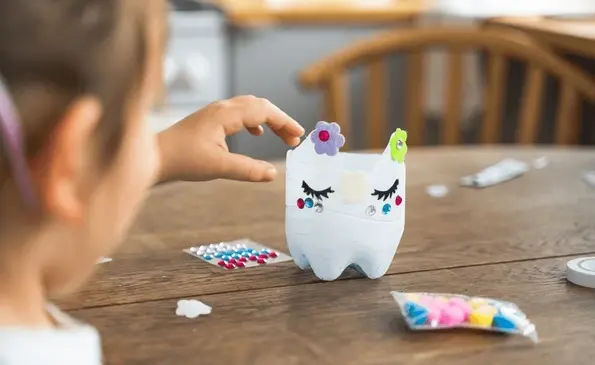
Activities using materials classified as waste are increasingly integrated into preschool programs and are also frequently chosen by conscious families. These activities are not only a recycling effort but also help children develop creative thinking skills. Children who work with waste materials at an early age gain significant awareness of environmental issues.
Enhancing Creativity with Waste Material Activities
Children explore the world through play. In early childhood, activities are an important part of how children perceive their surroundings. Activities that provide a space for expressing creativity help shape the way children view the world. The effective use of waste materials and the variety of materials used directly influence the success of these creative learning experiences.
Waste materials that may seem meaningless on their own can be transformed into limitless creations depending on the child’s imagination. Unlike ready-made toys, waste material activities involve creating scenarios, pushing the limits of imagination, and encouraging cognitive engagement such as problem-solving. As a result, children’s creative thinking capacity develops significantly.
Waste materials offer children resources without a fixed function that can be transformed in countless ways. This, unlike ready-made toys, encourages the child to think, imagine, and create different scenarios. For example, a cardboard box could become a car, a house, or a robot, directly developing mental flexibility and creative thinking skills. In the learning process, activities also help children develop problem-solving skills and original thinking abilities.
Problem-solving is an indispensable part of creative activity processes. A child must use problem-solving skills to turn a piece of waste material into the desired shape. Trial-and-error learning processes support cognitive flexibility in these activities.
Original thinking allows children to think differently from their environment and develop their own ideas. In waste material activities, children create their own designs, developing personal ways of expressing themselves. They learn to express their own ideas more comfortably. The resulting individual differences also contribute directly to building self-confidence.
How Waste Material Activities Contribute to Child Development
Activities with waste materials, when examined as a whole, have been scientifically proven to positively impact multiple areas of child development. When the contributions of using waste materials effectively are analyzed, it is clear that they actively support the development of motor skills, cognitive abilities, and social-emotional skills.
Skills Supported by Waste Material Activities:
 Motor Skills
Cognitive Development
Social Learning
Development of Motor Skills
Children develop motor skills by balancing hand-eye coordination and using their finger muscles. Cutting, gluing, punching, and assembling materials during waste material activities work small muscles and strengthen motor skills.
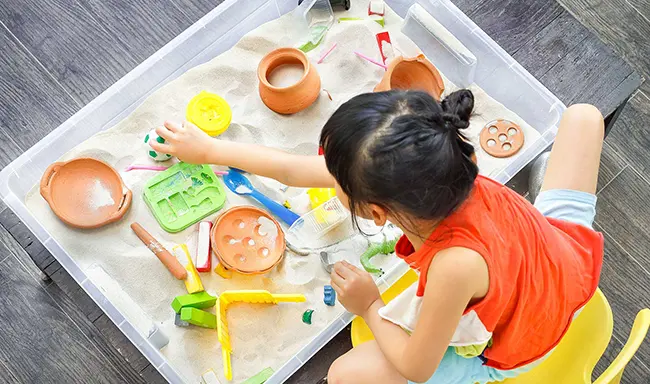
Cognitive Development
Problem-solving, classifying, and sequencing are all processes that define cognitive development. In project activities using waste materials, it becomes easier for children to plan and see results. At the same time, building cause-and-effect relationships positively impacts their cognitive growth.
Development of Social Learning Skills
Participating in waste material activities helps children develop social learning skills. Empathy, expressing themselves in a group setting, and learning to share all allow them to gain experience in social learning. All these multidimensional contributions make these activities valuable pedagogical tools for children.
The Importance of At-Home Waste Material Activities
The foundations of a child’s learning process are built at home. Since the home is where they spend most of their time, waste material activities allow children to spend quality time with their families. This strengthens emotional bonds and increases the child’s self-confidence.
At-home waste material activities are simple to carry out, so parents can guide the child in the initial stages. Using a supportive approach and teaching through play lengthens the child’s attention span. These activities are both fun and developmental, so it is important to do them regularly.
Points to Consider in Waste Material Use Activities
Ensuring the safety of the process is one of the most critical factors in activities that use waste materials. Educators and parents working with children should be careful when selecting materials.
The first criterion to consider when selecting materials is age appropriateness. It is essential to check pieces for choking hazards, especially very small parts. In addition, using soft-edged waste materials without sharp points helps prevent accidents.
Before the activity, hygiene rules must also be observed for the health of the children. Drink containers should be washed and sterilized if necessary. Similarly, packaging from food products should be presented to children only after ensuring any hygiene risks have been eliminated.
When planning the activity, it is also important to consider whether the product created will actually be usable. If the product will not be used and will soon be discarded, then extra materials like glue and paint used during the activity will also become waste. This may contradict the activity’s goal of promoting environmental awareness. For this reason, activities should be designed not only to produce items but also to create functional and long-lasting products.
The main goal of activities using waste materials should be to raise environmental awareness in children, increase their creativity, and improve their manual skills. The value lies more in the quality of the learning process than in the final product being perfect or aesthetically pleasing. However, if the environmental cost of the activity outweighs the benefits for children, then the choice of materials and methods should be reconsidered, and the balance between gains and losses should be carefully evaluated.
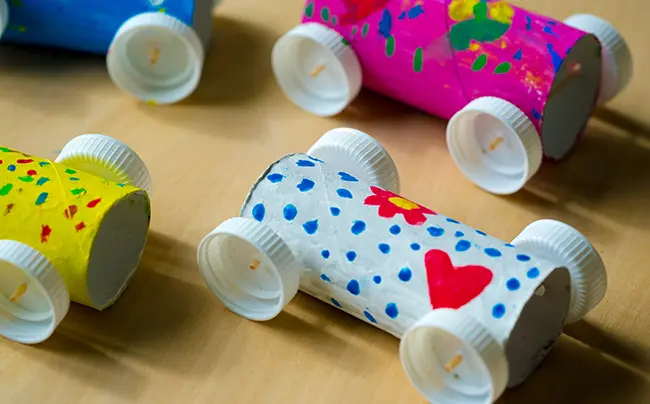
Values Gained by Children Through Sustainable Waste Material Activities
Waste material activities, which are part of sustainable education methods, give children concrete values that make the concept of sustainability more understandable. Materials that seem useless in daily life become useful again through recycling in these activities, which is one of the key aspects of their sustainability.
Since children’s awareness is often higher than that of adults, it becomes easier for them to develop a sense of environmental responsibility. Reviewing and questioning consumption habits is also among the benefits of activities that use waste materials. Internalizing the idea of transforming rather than discarding materials at an early age plays an effective role in gaining self-discipline.
One of the most important values gained through sustainable waste material activities is instilling the idea of contributing to a livable world. Developing habits early supports the idea that not everything is waste after consumption. This transforms children into individuals who produce and repurpose rather than just consume.
Activities using waste materials are not only short-term fun but also the first step toward raising conscious individuals and creating a livable world in the long run.
 Previous